
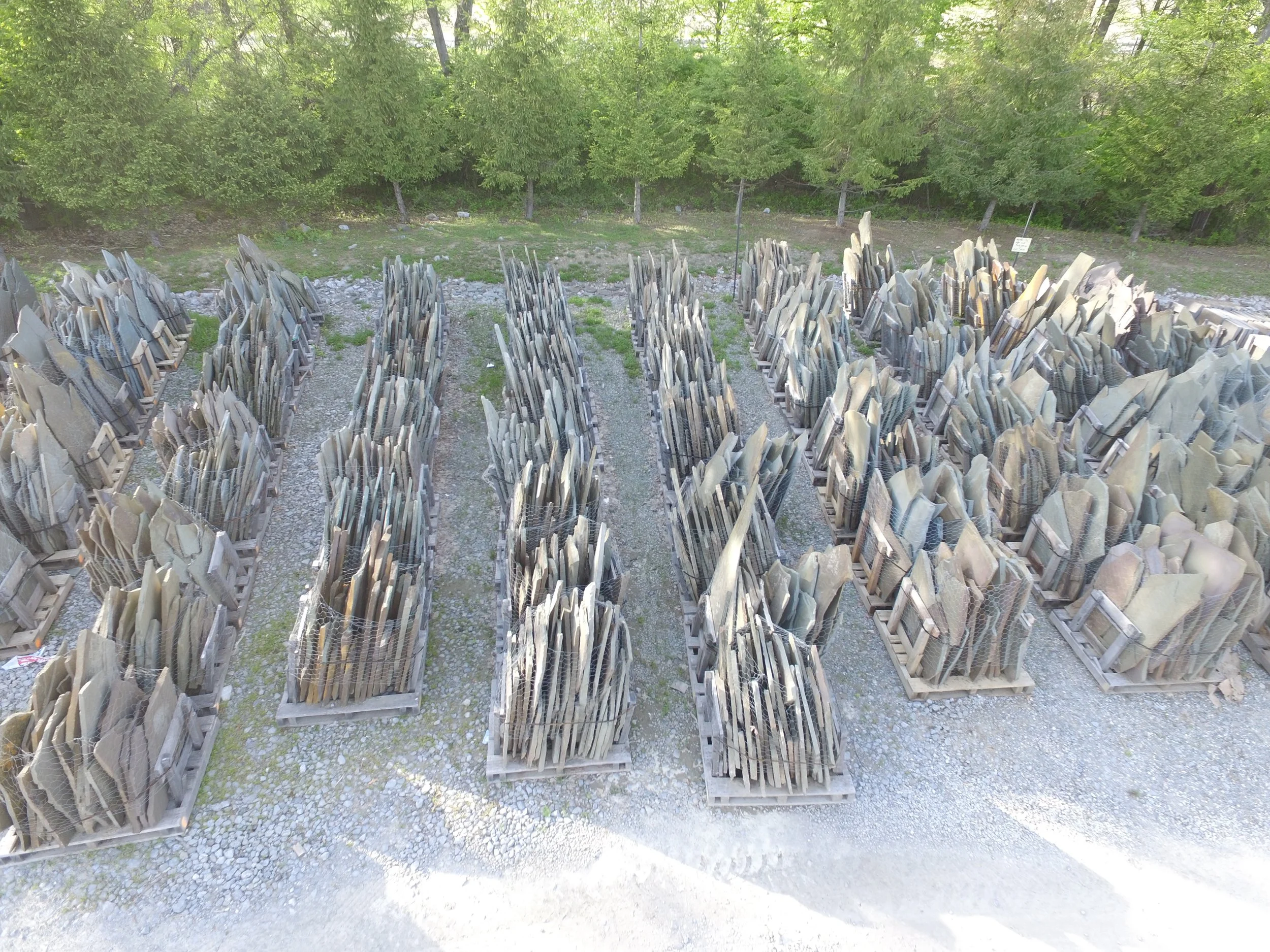
Walking into a garden supply store in Florida, NY for the first time is a different experience from walking into a retail nursery. The yard is measured in acres rather than aisles, material is sold by the cubic yard and the pallet, and the person at the counter expects a number rather than a browse. A little preparation turns that into an easy trip.
E.P. Jansen has been a family-run company since its conception in 1972, and the yard now carries over 30 acres of nursery stock. Our team supplies materials rather than installing them, so the job here is to get a homeowner the right product, in the right quantity, loaded or delivered correctly, and back to the project the same day.
Here is what to work out before the trip, how quantities are calculated, what a homeowner’s vehicle should realistically haul, and when delivery becomes the sensible call.
Related: 4 Essential Landscape Materials for Your Vertical Garden Project in Sullivan County, NY
Do Homeowners Need an Account to Buy at E.P. Jansen?
Homeowners need no account to buy at E.P. Jansen, and no trade license or minimum order either. Homeowners buy directly from the yard every day, and the same mulch, stone, soil and plant material that leaves on a contractor’s trailer in the morning leaves in a homeowner’s pickup in the afternoon.
That matters more than it sounds, because a great deal of landscape material is sold through channels that assume a trade buyer. Buying two yards of mulch at trade-yard quality without an account removes the usual choice between a bagged product and a wholesale minimum.
The one difference is the format. Material here is bulk, which means it arrives loose in a bucket rather than in a sealed bag, and it is measured in cubic yards. Getting comfortable with that unit is most of what this guide covers.
How Much Bulk Material Does a Landscape Project Need?
A landscape project needs its square footage matched to the depth the material goes down, and the arithmetic does the rest. One cubic yard of mulch covers roughly 100 square feet at a three inch depth, which is the figure most bed projects are built on.
Measure beds as rectangles and circles rather than guessing at an irregular shape. A curved bed broken into two rectangles and a half circle lands within a few percent of the truth, and that is close enough for a material sold in whole yards.
Depth is where people under-order. Three inches is a working mulch depth that suppresses weeds and holds moisture. One inch looks like mulch on the day it goes down and disappears by August, so a bed topped at one inch has effectively bought a color rather than a function.
Why Should Homeowners Round a Bulk Order Up?
Homeowners should round a bulk order up because a second delivery for a partial yard is rarely practical. A second trip for a half bucket of stone costs more in fuel and time than the material is worth, which is why our counter staff typically suggest ordering slightly more than the calculation shows.
Leftover bulk material is also easy to use. Spare mulch tops up a bed elsewhere, spare topsoil fills a low spot in a lawn and spare gravel goes under a downspout. Running short mid-project, with half a bed done and the light going, is the outcome worth avoiding.
How Do Bulk Mulch, Soil, Stone and Sand Products Differ?
Bulk mulch, soil, stone and sand products each come in versions that behave differently, so the right one depends on the job. Mulch comes in Natural Blends, Pine Bark and Premium Hardwood. Natural blends hold color for a season, pine bark is lighter and drains freely, and premium hardwood knits together into a mat that resists washing out on a slope, which is the property that matters on a sloped Hudson Valley bed.
Soil products are not interchangeable either. Topsoil is a growing medium for turf and beds, while mushroom compost is an amendment that adds organic matter and holds water. Using compost where topsoil was needed produces a bed that settles several inches over a year.
Stone splits by size and by fines content. Three quarter inch crushed stone has fines in it and compacts, which is what a base course wants. Three quarter inch clear crushed stone drains, which is what a trench or a dry well wants, and putting one where the other belongs is a common homeowner mix-up at the counter.
Sand follows the same logic. Washed concrete sand is a structural bedding product, and other bulk sands are not. A patio bedded on the wrong sand moves within a season or two.
What Can a Pickup Truck Safely Carry From the Yard?
A pickup truck safely carries less bulk material than most people assume, because the weight varies with the product and its moisture.
A yard of dry mulch is comparatively light. A yard of wet topsoil or a yard of stone is a completely different load, and a half ton pickup that handles the first comfortably is overloaded by the second.
Our staff will tell a homeowner plainly what is realistic to haul in the vehicle at hand. Bring the biggest vehicle available and expect to be advised on how much it should take.
Bring a tarp as well. Loose material on the road is both a mess and a liability, and a tarp with a couple of bungees turns a stressful drive home into an ordinary one.
When Does Bulk Delivery Make More Sense Than Pickup?
Bulk delivery makes more sense than pickup once an order passes about two yards. Two pickup loads means two round trips, two loadings and a vehicle carrying weight it was not designed around, and delivery often costs less than the fuel and the afternoon.
Placement is the other argument. Orders can be dropped at a home or staged directly on a job site, and a driver who puts the pile where the work is saves a homeowner from barrowing material the length of a property. Five minutes spent choosing the drop location before the truck arrives pays off.
Plan the surface the pile will sit on. A driveway is ideal. A lawn takes a pile for a day or two without lasting harm, but longer than that and the grass underneath is gone, so laying a tarp down first makes the cleanup far easier either way.
How Should Homeowners Choose Plant Material in the Hudson Valley?
Homeowners should choose plant material by site first and appearance second. Sun exposure, drainage and wind exposure decide what survives, and a plant that wants free-draining soil will sulk for two years in a heavy Orange County clay bed before giving up.
Our nursery stock covers evergreen and deciduous trees, fruit trees, ornamental grasses, shrubs, perennials and seasonal annuals. That is enough range that a difficult position usually has a good answer rather than a compromise.
Buy the size the project needs rather than the size the budget prefers. A larger caliper tree often establishes more slowly than a smaller one and frequently loses the race over five years, so the smaller plant is often the better investment as well as the cheaper one.
Related: How Garden Nursery & Masonry Supply in Bergen County, NJ, Helps You Create Lasting Outdoor Style
What Should a Homeowner Know About Buying Natural Stone?
A homeowner buying natural stone should know it sells by the pallet and by weight, varies from pallet to pallet, and comes in thicknesses that decide how it gets installed. Color, thickness and surface vary between quarry runs, which is part of the appeal and also a reason to buy the whole quantity for a project at once rather than returning for more later.
Thickness decides the installation. Thin flagstone is intended to be set on a mortar bed over a concrete base, while thicker full-range stone can be dry laid on compacted aggregate. A homeowner who buys one and installs it as though it were the other ends up with a cracked patio.
Our yard carries natural stone including bluestone, limestone, flagstone, Vermont slate, Belgium block, fieldstone, wallstone, steps and slabs, veneer and landscape boulders. The counter staff will walk a homeowner through which of those suits the job described, and that conversation saves a great deal of money.
When Is the Right Time of Year to Buy Landscape Materials and Plants?
The right time of year depends on what is being bought, because materials and plants run on different calendars. Bulk stone, sand and gravel sell year round. Mulch and topsoil have a spring rush that is predictable enough to plan around, and a bed topped in late March will have been bought in a queue.
Plant material runs the opposite way. Autumn planting in the Hudson Valley gives roots a cool, damp window to establish before the ground freezes, so the plant goes into spring already settled rather than starting from zero.
Nursery stock is also at its most interesting in autumn, because what is still standing in the yard has proven itself through a full season.
Hardscape projects tend to go another way again. Homeowners who order stone in late autumn are usually building through the winter or staging for an early spring start, and both are sensible. Material bought and stacked on site in November is material that is not competing for a loader in April.
How Should Landscape Material Be Stored Before the Work Starts?
Landscape material stores well when stone sits on firm ground and bulk material arrives close to the day it goes down. Stone and paver pallets sit outside without harm as long as they are off soft ground and not blocking access.
Keep them off a lawn that will be needed later and off anything that holds water, because a pallet settling into soft ground is awkward to lift again.
Bulk material is less patient. Mulch left in a pile for weeks heats up and sours, and topsoil left uncovered grows a crop of weeds from whatever seed blows into it. Order bulk close to the day it is going down, and tarp anything that has to wait.
How Does Bulk Compare With Bagged Material on a Small Project?
Bulk beats bagged material on most small projects, because the per-unit arithmetic turns against bags quickly. Two yards of mulch is roughly twenty seven bags, and nobody enjoys loading, carrying and splitting twenty seven bags for a result one bucket of bulk delivers in a minute.
The crossover point is lower than most homeowners think. By the time a job needs more than about ten bags of anything, bulk is typically cheaper, faster and better material, because the bulk product has not been sitting in plastic through a summer.
Bagged still wins on the genuinely tiny job and the awkward access. A single planter, a repair patch or a property with no access for a delivery truck are all reasonable cases for bagged product, and the yard stocks both so the choice stays open.
What Should a Homeowner Bring on a First Trip to the Yard?
A homeowner should bring measurements, photographs and a rough idea of the finish wanted on a first trip to the yard. That means the length and width of each bed or surface, the depth intended, and a photo of the house or the existing material the new work has to sit next to.
The photograph does more work than people expect. Matching a new stone to an existing wall, or choosing a mulch color that works against a particular brick, is far easier with a picture than with a description, and it avoids a second trip to exchange something.
A sample is better still where the project is matching something. A single paver, a piece of the existing stone or a handful of the current mulch lets the counter confirm a match rather than estimate one, and our paver and retaining wall materials come from seven manufacturers, so a close match is usually on hand.
Plan Your First Garden Supply Trip to E.P. Jansen in Florida, NY
Most of the difficulty in buying landscape material comes from unfamiliar units and products that look similar and behave differently.
Our counter staff would rather spend ten minutes working through a project than watch a homeowner guess, and the yard is set up so a first-time buyer leaves with the right material in the right quantity.
Bring your measurements to the yard in Florida, NY, and we will sort out what the project needs with you. Plan your garden supply visit with E.P. Jansen.
In Summary
How much mulch does a typical front bed in Florida, NY need?
A typical front bed in Florida, NY needs about two and a half yards of mulch at a three inch depth. A bed running thirty feet along a house at eight feet deep is about 240 square feet, and dividing square feet by 100 gives the yards needed. Round up rather than down, because a second trip for a half yard is rarely worth making.
Can E.P. Jansen recommend someone to install what we buy?
E.P. Jansen supplies materials rather than installing them, and the team can refer a contractor when a homeowner decides to hire out the work. For a homeowner doing the work themselves, the counter will talk through base depths, bedding material and quantities before anything is loaded.
Is there a minimum order for bulk material?
E.P. Jansen sets no minimum order for bulk material, and homeowners need no account or trade license to buy. Material sells by the yard and can be loaded into a vehicle on site or delivered, and delivery generally becomes the better value somewhere above two yards.
Does E.P. Jansen deliver bulk material into New Jersey?
E.P. Jansen delivers from its Florida, NY yard into Sussex and Bergen counties and the wider North Jersey region, along with Orange, Rockland, Sullivan and Ulster counties in New York. Customers outside those areas can call the yard to ask about arranging delivery.
Related: Why Visiting a Garden Center and Plant Nursery in Bergen County, NJ, Makes Seasonal Planning Easier
