
A retaining wall does quiet, constant work. It holds back soil, manages a grade change, and keeps a yard usable, and it does that job for decades when the right materials go into it. Choosing retaining wall materials in Florida, NY, is the decision that sets the whole project up, because the block or stone at the base of a wall answers to the Hudson Valley's freeze-thaw winters, wet springs, and shifting clay long after the wall is built.
The wrong material fails in ways that are expensive to undo. A wall built from units that absorb water and crack, or from stone that was never rated for the load, leans and crumbles within a few seasons. The right material, matched to the job and the climate, stands straight and looks the same in year fifteen as it did on day one.
E.P. Jansen Nursery has supplied retaining wall systems, natural stone, and pavers to Hudson Valley contractors and homeowners as a family-run company since 1972, and more than fifty years of stocking materials for this specific region shapes the guidance the team gives at the stone yard. As an authorized dealer for the industry's leading wall brands, Jansen's guides homeowners and contractors to materials built to perform in Orange County and the surrounding area rather than a product that only looks good in a catalog.
The sections below walk through the main types of retaining wall materials, which hold up best in this climate, how to match a material to the job, and where to see the options in person before you buy.
What Types of Retaining Wall Materials Are There?
Retaining wall materials fall into a few broad categories, and each one carries its own strengths, price, and installation demands. Knowing the categories makes the choice at the stone yard far clearer.
Segmental Retaining Wall Block
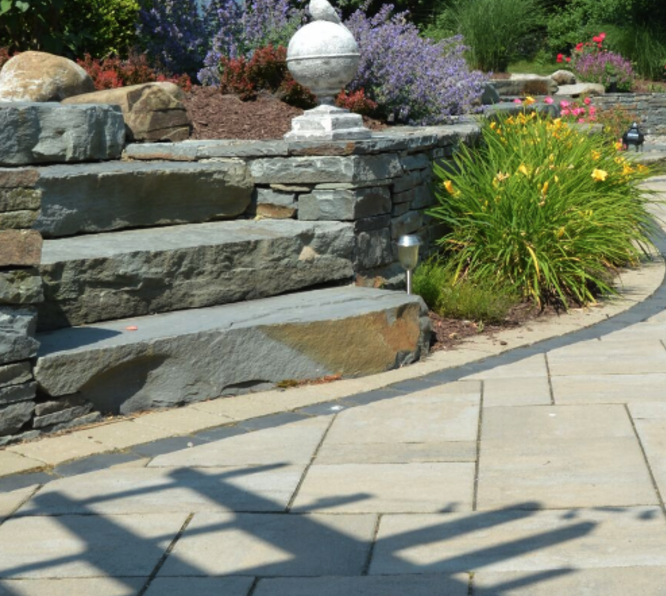
Segmental retaining wall block is the workhorse of modern walls. These are engineered concrete units, made to interlock and stack into a stable structure without mortar. Manufacturers such as Unilock, Techo-Bloc, and Cambridge produce block in a range of colors, textures, and face styles, so a wall performs like an engineered system while matching the look of the home.
The appeal is consistency. Every unit is the same size and strength, which makes the wall predictable to build and reliable over time. For most residential walls in the Hudson Valley, segmental block delivers the best balance of strength, cost, and appearance.
Natural Stone
Natural stone brings a look that manufactured units cannot copy. Fieldstone, bluestone, and granite each carry their own color and character, and a dry-stacked or mortared stone wall reads as enduring and rooted in the landscape. Stone rewards the eye, and it rewards a skilled installer who knows how to fit irregular pieces into a stable structure.
The tradeoffs are cost and labor. Natural stone runs higher than block and takes more skill and time to build well. For homeowners who want a wall that looks like it grew out of the property, the investment earns its place.
Boulders and Fieldstone Walls
For larger grade changes and a rugged, natural look, boulder walls move serious earth. Large stones set into the slope hold back significant soil while creating a bold, organic feature. These walls suit rolling, wooded Hudson Valley properties where the terrain calls for scale.
Boulder walls need heavy equipment and an installer who understands how to seat and lock the stones. The material itself is durable, and the finished wall handles the elevation changes that many local properties present.
Poured and Structural Options
Some walls, especially taller ones or walls carrying heavy loads, call for poured concrete or engineered structural systems. These handle the greatest loads and often pair with a stone or block facing for appearance. A wall of this scale involves engineering and permitting, and the material choice follows the structural plan rather than leading it.
Pavers and Companion Materials
A retaining wall rarely stands alone. The same project often calls for a paver patio, a walkway, steps, or wall caps that tie into the structure, and matching those materials to the wall keeps the whole space cohesive. Buying the wall units and the companion pavers from one supplier means the colors and styles coordinate and the quantities work out across the job. Planning the wall and its surroundings together, from a single source, produces a finished space that reads as one design rather than a wall bolted onto a yard. A stocked supplier lets a buyer see how the wall, the patio, and the coping look side by side before committing to any of them.
Which Retaining Wall Materials Hold Up Best in the Hudson Valley Climate?
Material that performs in a mild climate sometimes fails in the Northeast. The Hudson Valley puts specific demands on a wall, and the best materials answer them directly.
Freeze-Thaw Resistance
The single hardest test a local wall faces is the freeze-thaw cycle. Water works into any material, and when it freezes it expands with enough force to crack and spall a unit from the inside. Over a Hudson Valley winter this happens dozens of times. Quality segmental block and dense natural stone resist that cycle because they absorb little water and shed it fast. Cheaper, porous units soak up moisture and break down within a few years.
Drainage-Friendly Materials
A wall survives on drainage, and the materials behind the face matter as much as the face itself. Clean crushed stone and proper drainage aggregate behind the wall give water a path away from the structure instead of trapping it against the block. The best material selection includes the backfill and drainage stone, not only the visible units. A wall built without that layer holds water, and water is what destroys walls in this climate.
Materials Matched to Local Soil
Orange County properties often sit on dense clay that holds moisture and moves with the seasons. That soil pushes hard against a wall and drains slowly. Materials chosen with local soil in mind, paired with the right base and drainage, stand up to that pressure. A supplier who knows the region steers a buyer toward units and stone rated for these conditions rather than a generic recommendation.
Color and Finish That Hold Up
A wall lives outdoors in full sun and weather, and its color has to last as long as its structure. Quality manufactured units carry color throughout the unit rather than only on the surface, so a chip or a scuff does not expose a different shade underneath. Dense natural stone keeps its character for generations. Cheaper units fade, streak, and show wear fast under the Hudson Valley sun and winter salt. Choosing materials engineered to hold their color protects the look of the wall for the long run, which matters on a structure meant to anchor a yard for decades.
How Do You Match Retaining Wall Materials to the Job?
The best material for one wall is the wrong material for another. Matching the material to the specific job protects both the budget and the result.
Wall Height and Load
Height drives the decision. A low garden wall holding a foot of soil answers to different rules than a wall retaining several feet of graded earth or supporting a driveway above it. Taller walls and walls carrying load need engineered units, geogrid reinforcement, and often an engineered design. The material has to match the structural demand, and a short decorative unit set into a structural job is a common and costly mistake.
Decorative or Structural
Some walls exist mainly to shape a bed or add a low border, and those give more freedom in material and style. A structural wall holding a slope in place has a job to do first and a look to deliver second. Identifying which role a wall plays points directly to the right family of materials.
Appearance and the Home
Once the structural needs are set, appearance narrows the choice. The color, texture, and style of the units tie the wall to the house and the rest of the hardscape. Seeing block and stone in person, in full sun and against real surroundings, settles this far better than a swatch on a screen. This is where a stocked display earns its value, because the wall a homeowner pictures becomes the wall they actually get.
Budget and Long-Term Value
Budget shapes every project, and material is a major line in it. Segmental block stretches a budget while delivering strength and a clean look. Natural stone and boulders cost more up front and reward the investment with character and longevity. The cheapest material rarely wins over the life of the wall, because a unit that fails early turns into the cost of building the wall twice.
Working From a Contractor's Spec
When a contractor is already involved, the material list often arrives as a specification: a named wall system, a set base depth, a drainage detail, and a reinforcement plan. Bringing that spec to a supplier that carries the named products keeps the purchase simple and the wall on plan. A supplier stocking the major engineered systems fills a spec exactly rather than pushing a substitute that changes how the wall performs. Matching the purchase to the plan protects the engineering behind the wall, because a swapped unit or a lighter base quietly undoes the design the contractor built the wall around.
Segmental Block or Natural Stone: Which Is Right for Your Wall?
The choice between engineered block and natural stone comes up on nearly every project, and neither answer is automatic. The right pick depends on the look, the budget, and the job.
The Case for Segmental Block
Segmental block wins on consistency and value. The units are engineered to a known strength, they stack predictably, and they carry manufacturer warranties through an authorized dealer. The range of colors and textures now available means a block wall looks refined rather than utilitarian. For most homeowners balancing performance, appearance, and cost, block is the practical and durable answer.
The Case for Natural Stone
Natural stone wins on character. No two stones are alike, and a well-built stone wall carries a look that manufactured units approximate but never match. Stone suits historic homes, wooded lots, and projects where the wall becomes a feature rather than a background. The cost and the skilled labor are real, and the payoff is a wall that feels permanent and rooted.
Buying From an Authorized Dealer
Whichever direction a project goes, buying through an authorized dealer protects the purchase. An authorized dealer stocks genuine product, backs it with the full manufacturer warranty, and carries the depth of inventory to match units across a large job. That warranty and authenticity guard the investment, and a dealer who knows the brands guides a buyer to the right unit for the wall.
Combining Block and Stone
The choice is not always one or the other. Many walls pair an engineered block core with a natural stone veneer, capturing the structural reliability of block and the look of real stone. Others use block for the structural walls and natural stone for a feature wall or a seating area that people see up close. A supplier with both in stock guides a buyer toward a combination that fits the budget and the look, so the wall performs like engineered block and reads like natural stone. Seeing the pairing in person settles a choice that a catalog only hints at.
Where Should You Buy Retaining Wall Materials Near Florida, NY?
The material is only as good as the source and the guidance behind it. A stocked, knowledgeable supplier turns a confusing choice into a confident one.
See the Materials in Person
Photos flatten color and hide texture. Seeing retaining wall block and natural stone in person, laid out in real light and next to companion pavers and plantings, shows exactly how a wall will read. A supplier with full displays lets a homeowner or contractor compare options side by side and commit to a material with confidence rather than a guess.
Depth of Inventory and Selection
A large project needs enough matched material to finish without a mid-job shortage, and a strong wall often pairs stone, block, pavers, and plantings into one cohesive space. A supplier that stocks natural stone, wall systems, pavers, bluestone, granite, bulk support materials, and nursery stock lets a buyer plan the whole project from one source rather than chasing pieces across several yards.
Expert Guidance and Contractor Referrals
The right supplier does more than sell material. The team reads a project, points a buyer toward units rated for the job and the climate, and, for homeowners who need one, refers a reputable installer in the area. That combination of quality material and honest guidance is what keeps a wall standing and a project on track.
Delivery and the Materials Under the Wall
The units on the face are only part of the order. A wall needs base aggregate, drainage stone, and bulk support materials underneath and behind it, and those materials arrive in volume. A supplier that stocks and delivers bulk materials alongside the finished units saves a buyer from sourcing the hidden two-thirds of the project somewhere else. Reliable delivery also keeps a job moving, because a wall build stalls fast when the base stone does not arrive on time. A supplier equipped to deliver both the finished units and the bulk material behind them keeps a project on schedule from the first course to the cap.
Choose Your Retaining Wall Materials With E.P. Jansen Nursery
A retaining wall is a long-term investment in a property, and the materials decide whether that investment holds its ground. The right block or stone, matched to the job and built for the Hudson Valley climate, delivers a wall that performs quietly through every season and looks the same for decades.
Homeowners and contractors across Florida, NY and the wider Hudson Valley trust E.P. Jansen Nursery for retaining wall materials backed by knowledgeable guidance. As a family-run supplier since 1972 and an authorized dealer for the industry's leading wall brands, Jansen's stocks the natural stone, segmental block, pavers, and bulk support materials that outdoor projects depend on, along with the nursery stock to finish the space.
Visit the E.P. Jansen Nursery stone yard in Florida, NY to see retaining wall materials in person and talk through your project with a team that knows what lasts in the Hudson Valley.
Related: Design Stunning Landscape Terraces for Your Clients Using Retaining Wall Blocks in Bergen County, NJ
