
Spring bed work in the Hudson Valley usually stalls on the same question: how much material does the property actually need, and how does it arrive without forty plastic bags stacked against the garage wall. Homeowners shopping for bulk mulch in Florida, NY are generally past the bagged stage and ready to buy by the cubic yard, which changes how you measure, how you order, and how the material reaches your beds.
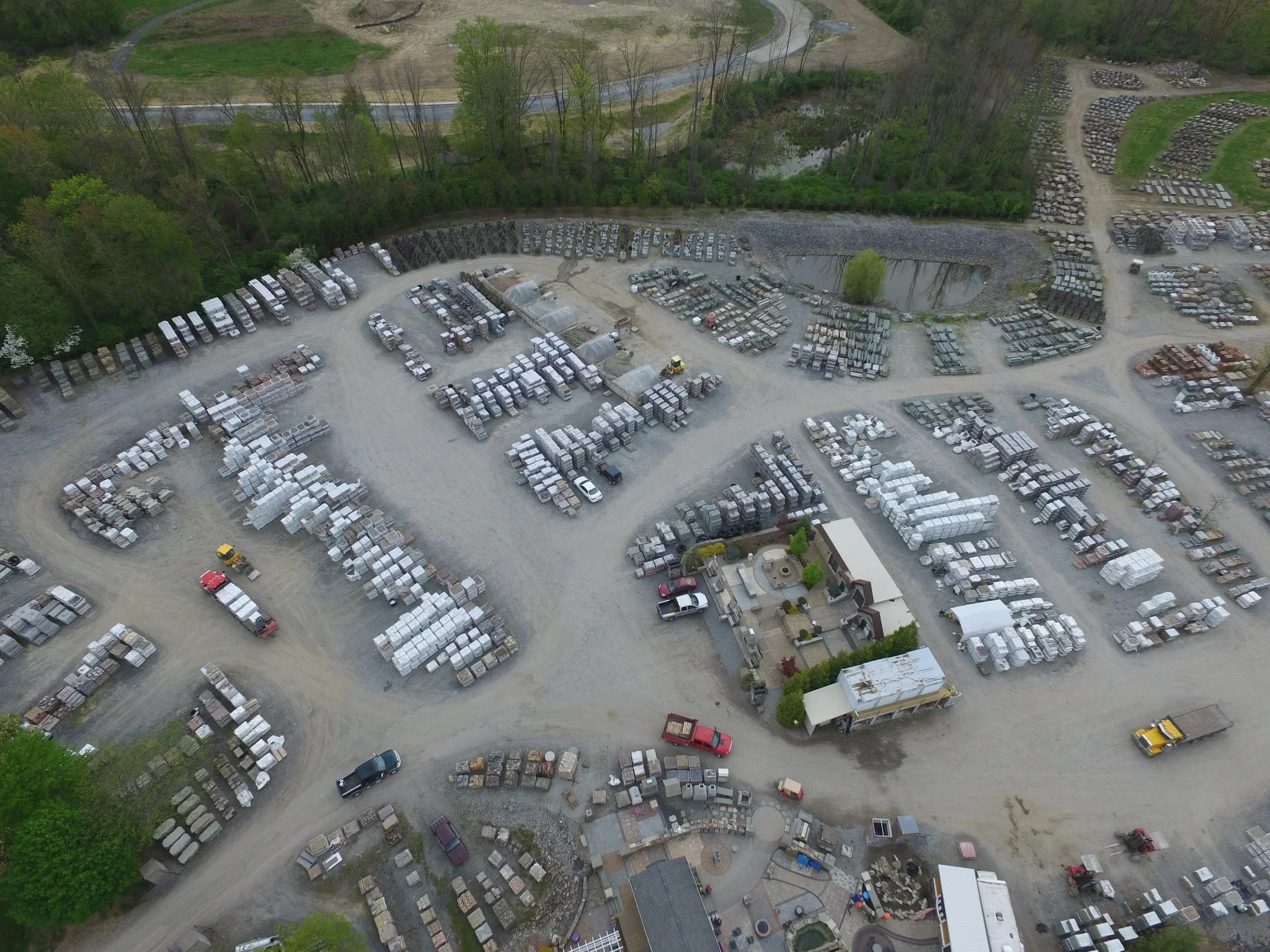
Our family has sold plants and landscape supplies on Glenmere Avenue since Elizabeth and Jan Jansen started the nursery in 1972, and the operation today covers more than 71 contiguous acres of nursery ground alongside a nine-acre stoneyard.
This guide walks through the mulch types we keep in bulk, the arithmetic behind your yardage, and what pickup and delivery actually look like on a residential property.
Related: Bulk Topsoil and Mulch Delivery Services That Enhance Outdoor Spaces in Bergen County, NJ
What Is the Difference Between Bulk Mulch and Bagged Mulch?
Bagged mulch is sold in two or three cubic foot bags. Bulk mulch is sold by the cubic yard, and a single cubic yard holds 27 cubic feet, roughly thirteen and a half of the standard two cubic foot bags.
Buying by the yard removes the plastic, the stacking, and the repeat trips, which starts to matter once a project passes two or three yards. Most residential orders we load at the stoneyard land between three and eight yards, a volume that becomes a wall of bags in bagged form.
Consistency is the other practical difference. Bulk material gets screened and blended in volume, so color and texture stay even across your entire order. Bags pulled off a retail shelf often come out of different production runs, and that variation shows up later as patchy color across a bed. Ordering the whole quantity at once keeps one bed matching the next.
Handling runs the other direction. Bulk arrives as a single pile that suits a wheelbarrow and a mulch fork, while bags stay contained and move one at a time. Homeowners working a tight driveway or a second-floor terrace sometimes prefer the containment of bags for that reason. Our bulk supplies yard keeps each product staged in open bins so you see and handle the material before committing to a quantity.
How Much Bulk Mulch Do You Need for Your Beds?
The arithmetic is straightforward. Multiply the square footage of the bed by the depth you want in inches, then divide by 324. A 600 square foot bed at three inches deep works out to 5.6 cubic yards, so you would order six.
Irregular beds throw people off more than the formula does. Break a curving border into a series of rectangles and half circles, measure each at its widest point, then add the pieces together. Adding about ten percent to the total covers settling, spillage, and the low spots you find once you start spreading. Running slightly over is generally the more comfortable position, since a leftover half yard tops off a tree ring while a short order means a second trip.
Depth changes the answer more than most homeowners expect. That same 600 square foot bed needs 3.7 yards at two inches and 7.4 yards at four inches, so settling on your depth before you measure saves a recalculation. Beds that were mulched last season usually need less than the full depth because a base layer is already in place.
Bring your measurements to the counter and our staff will run the yardage with you. We do this dozens of times a week during spring, and a two minute conversation about bed shape, existing mulch depth, and plant type often adjusts the number in a useful direction. Homeowners planning a larger renovation across multiple planting areas are welcome to bring a sketch.
Which Types of Bulk Mulch Work Well in Hudson Valley Landscape Beds?
We stock three broad categories in bulk, and the right pick depends on what the bed is doing rather than on which pile looks nicest in the yard.
Premium Hardwood
Hardwood mulch is the workhorse for foundation beds and shrub borders. It knits together as it settles, which gives it real staying power on gentle slopes where looser material tends to migrate during heavy Hudson Valley rain. That same knitting action suppresses weeds well, since the mat blocks light at the soil surface.
Hardwood breaks down faster than bark products, feeding organic matter back into the soil as it goes. That decomposition is a benefit in beds you want to enrich over time, and it is the reason hardwood beds usually want an annual top-off rather than a top-off every other year.
Pine Bark
Pine bark holds its color and its structure considerably longer than hardwood. The larger nugget grades resist compaction, so air and water move through to the root zone rather than sheeting off the surface. Beds under mature trees and around established nursery stock and specimen plantings do well with bark for that reason.
The tradeoff is movement. Nuggets float and roll, so bark is a poor match for a steep bank or a bed that sits below a downspout. On flat ground it stays put and looks clean well into a second season.
Natural Blends
Our natural blends are undyed and lean toward the darker brown end without any colorant. Homeowners who want the deep contrast that makes green foliage read sharply, without introducing a dye, tend to land here. The blend also composts down at a moderate rate, sitting between hardwood and bark in longevity.
Blends suit mixed beds where perennials, shrubs, and small trees share ground. The finer texture settles around perennial crowns without burying them, and it looks appropriate against stone edging and paver borders.
How Deep Should Mulch Be Around Trees, Shrubs, and Perennials?
Two to three inches is the working range for most landscape beds. Below two inches, sunlight reaches the soil and weed seed germinates. Past four inches, the layer starts shedding water rather than admitting it, and the soil underneath stays cold well into the growing season.
Trees need a specific adjustment. Mulch piled against a trunk traps moisture on the bark, invites rot, and encourages girdling roots to circle the stem, so pull the material back three to six inches and leave the flare visible. A wide, flat ring reaching toward the drip line does far more for a tree than a cone piled at its base. Our staff sees the consequences of volcano mulching often enough that we raise it with almost every homeowner buying for a young tree.
Perennial beds want a lighter hand. Crowns smothered under three inches of settled mulch struggle to push through in spring, so an inch and a half is a more comfortable target around herbaceous material. Work the mulch around the crowns rather than over them.
Existing mulch counts toward your depth. Before ordering, push a trowel into an established bed and measure what is already there, then order only the difference. Beds that have been mulched annually for several years sometimes need no new material at all, just a rake to break the crust and refresh the color.
When Should You Order Bulk Mulch in Orange County, NY?
Mid-April through May is the heaviest window in our yard. Waiting until the soil has warmed matters, because mulch applied over cold ground in March insulates that cold in and slows root activity just as plants are trying to start. Letting the ground warm first gets you the moisture retention benefit without the delay.
A second window opens in the fall, typically October and into early November. Fall mulching moderates soil temperature swings through the freeze-thaw cycles that define winter here, and those cycles heave shallow-rooted perennials out of the ground when bare soil is exposed. A fresh layer going into winter reduces that heaving considerably.
Scheduling ahead is worth the phone call in spring. Saturday mornings in late April are the busiest hours of our year, and delivery slots fill several days out. Ordering midweek, or booking a week ahead, usually gets you a tighter delivery window across our Orange County service area.
Is Dyed Mulch Safe Around Plants and Pets?
The colorant itself is rarely the concern. Commercial mulch dyes are typically iron oxide for the reds and carbon black for the darker tones, both of which are inert and widely used in other products. Once the material has cured and dried, the pigment stays bound to the wood fiber rather than leaching into soil.
The wood underneath the color deserves more attention. Dyed products are sometimes manufactured from reclaimed construction debris or recycled pallets, and older pressure-treated lumber in that stream introduces material you would rather not spread around edibles or in a yard where a dog digs. This is the reason we ask our suppliers about feedstock and stock undyed natural blends alongside colored options.
Homeowners with vegetable beds or heavily used play areas often choose an undyed hardwood or bark product for those specific zones and use color elsewhere. Ask at the counter about what a given pile is made from. A supplier who knows the answer is giving you the information you need to decide.
Related: A Guide in Choosing Mulch From Our Landscape Supply for Sussex County, NJ, Projects
How Often Does Bulk Mulch Need Refreshing?
Most Hudson Valley beds want a top-off every spring rather than a full replacement. Hardwood loses roughly an inch of depth per season as it composts, so an inch of fresh material restores the layer and the color.
Full replacement makes sense every three or four years, particularly in beds that have accumulated a thick, matted layer. When old mulch forms a crust that sheds water, or when the depth has quietly crept past four inches through repeated top-offs, stripping it back to soil level and starting over restores drainage. Bark products stretch this interval longer because they break down more slowly.
Mid-season maintenance takes very little material. Raking a bed in July breaks the surface crust, exposes the darker material underneath, and restores much of the look without another delivery.
Do You Pick Up Bulk Mulch or Schedule Delivery?
Both work, and the deciding factor is usually vehicle capacity. A full size pickup with a standard bed carries about two cubic yards of mulch safely, and a half ton truck should stay closer to one and a half.
Loading at the stoneyard takes a few minutes. Pull into the bulk area, tell the loader operator your product and quantity, and a machine drops it into the bed. Bring a tarp and straps, since New York requires loads to be covered and mulch travels well in a breeze.
Delivery makes more sense past two yards. Our trucks run throughout Orange, Rockland, Ulster, and Sullivan counties in New York as well as northern New Jersey, and the driver places the pile where you direct rather than dumping at the curb by default. Larger orders arrive in a single drop, which spares you four round trips on a Saturday. The full delivery footprint is listed on our service areas page.
What Should You Have Ready Before Your Mulch Delivery Arrives?
Pick your drop spot before the truck turns in. The pile wants firm, level ground within wheelbarrow range of the beds, and a driveway apron usually beats a lawn, since a loaded truck leaves ruts in soft turf during a wet spring. Mark the spot with a cone or a bucket so the driver places it without guessing.
Lay a tarp down first if the surface matters to you. Mulch stains concrete and pavers, and a tarp under the pile turns cleanup into a lift rather than a scrub. This matters most on light colored natural stone and newer paver work.
Clear the approach. Move vehicles, trailers, and trash cans well ahead of the delivery window, and measure any gate or overhead branch the truck has to pass. Low limbs over a driveway are the single most common reason a delivery gets rescheduled.
Plan to move the pile within a few days. Fresh mulch sitting in a deep heap generates heat and holds moisture, and a pile left for weeks develops a sour smell that carries into the beds. Spreading promptly avoids that entirely.
Order Bulk Mulch for Your Florida, NY Property with E.P. Jansen Nursery
Bring your bed measurements to our counter and we will work out your yardage, walk you through the hardwood, bark, and natural blend piles in person, and schedule a delivery window that fits your weekend.
Our team has been supplying homeowners and landscape contractors across the Hudson Valley since 1972, and the same staff who load your truck will tell you honestly if three yards is enough. You are welcome to walk the yard, handle the material, and see the color in daylight before you decide.
Call us at (845) 651-4106 or get in touch through our contact page to place your bulk mulch order with E.P. Jansen Nursery.
In Summary
How many cubic yards of bulk mulch does an average Florida, NY front bed take?
Multiply square footage by depth in inches and divide by 324. A typical 400 square foot foundation bed at three inches takes about 3.7 yards, so most homeowners order four.
Do you deliver bulk mulch outside the Village of Florida, NY?
E.P. Jansen delivers across Orange, Rockland, Ulster, and Sullivan counties in New York as well as Bergen and Sussex counties in New Jersey, and customers also load directly at the Glenmere Avenue stoneyard six days a week.
Which mulch type suits a shaded Hudson Valley bed under mature trees?
Pine bark generally performs well there. It resists compaction, lets water reach the root zone, and holds its structure through a shaded season without matting down.
Should mulch touch the trunk of a tree?
Mulch should stay three to six inches back from the trunk so the root flare stays visible, with the ring spread wide and flat toward the drip line instead of piled into a cone.
Related: How Good Bulk Materials Can Increase the Lifetime of a Landscape in the Hudson Valley
